
World

Settler Rampages Against Palestinians in West Bank Increase in 2025
The year 2025 has seen a significant rise in settler rampages targeting Palestinians in the West Bank, with the Israeli Defense Forces (IDF) reporting an average of about 70 incidents per month. This increase surpasses the numbers from 2024 and previous years. Despite the escalation, the issue has garnered less attention from the majority of Israelis, who have been distracted by the ongoing war in Gaza and the opening of other fronts. The data, released by the IDF in November, highlights the growing concern of violence against Palestinians in the West Bank. The situation has been overshadowed by other conflicts, leading to a lack of awareness and attention to the increasing settler rampages. As the year comes to a close, the trend of rising violence against Palestinians in the West Bank remains a pressing issue that requires attention and action. The IDF's data serves as a reminder of the need to address the growing tensions and conflicts in the region. With the war in Gaza and other fronts dominating the headlines, it is essential to acknowledge and address the settler rampages in the West Bank to work towards a more peaceful and stable environment for all parties involved.

Gaza's Christian Community Finds Joy Amidst Devastation During Christmas
In the midst of a fragile ceasefire, Gaza's tiny Christian community is trying to capture the holiday spirit despite the destruction and uncertainty surrounding them. Attallah Tarazi, a 76-year-old Palestinian Christian, received Christmas presents, including socks and a scarf, and joined fellow Christians in singing hymns. The community is clinging to hope and faith, with Tarazi saying, "I feel like our joy over Christ's birth must surpass all the bitterness that we've been through." Cardinal Pierbattista Pizzaballa, the Latin Patriarch of Jerusalem, visited the Holy Family Parish, marking the beginning of Christmas celebrations in a community that has lived through dark and challenging times. However, for some, the toll of the war is inescapable, and the absence of loved ones who fled Gaza has made Christmas feel different. Despite the struggles, some Christians are trying to bring joy to their children, with Elynour Amash decorating her home and lighting the tree to create a sense of joy amidst the pain. The community remains determined to stay and preserve their Christian presence in Gaza, with Tarazi praying for peace and freedom for the Palestinian people. The war has caused widespread destruction, displacing the vast majority of Gaza's 2 million residents, and the Christian community is worried about their presence in the territory. Many Christians have fled, and some are hoping to leave if given the opportunity, which could affect the social fabric of Gaza. Despite the challenges, the community remains steadfast in their faith, with Amash saying, "Our presence, no matter how small, is a testimony of love, steadfastness, and faith in this land."
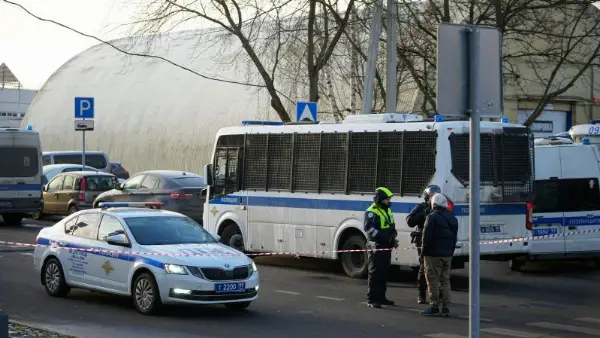
Moscow Bomb Blast Kills Two Police Officers Amid Ongoing Investigation
A bomb blast in Moscow has killed two police officers, just days after the apparent assassination of a top Russian general. The officers were approaching a suspicious person who detonated an explosive device near a police car, also killing the assailant. The incident occurred close to the scene of a car bombing that killed Lt. Gen. Fanil Sarvarov, who ran the armed forces operational training department, on Monday. Russian officials have suggested that Ukraine could be behind the general's death, citing it as one of the theories being pursued by investigators. However, Ukraine has not claimed responsibility for the attack. The Moscow Investigative Committee is examining the scene and studying CCTV footage to uncover the details behind the latest blast. Witnesses are also being interviewed as part of the investigation. This marks the second deadly bomb blast in Moscow within three days, raising concerns about national security and terrorism in the Russian capital. The investigative committee has not commented on whether the two incidents are linked. The series of attacks follows a pattern of targeted killings of prominent Russians in Moscow since the full-scale Russian invasion of Ukraine in 2022, with several blamed on Ukrainian security services.
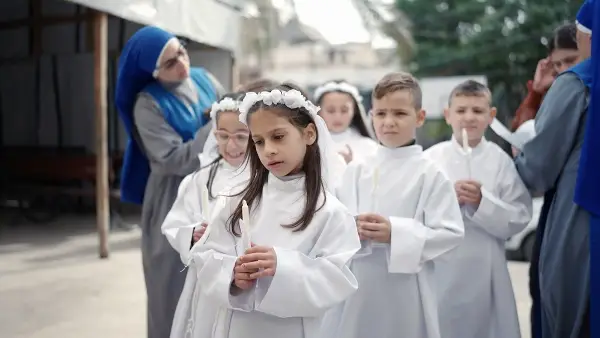
Gaza's Christian Community Prepares for Christmas Amid Ceasefire
As the Christmas season approaches, Gaza's Christian community is preparing to celebrate amidst a fragile ceasefire that has held for over two months. The community, which has been significantly impacted by the two-year war in Gaza, is hopeful for a long-lasting peace. Mousa Ayyad, coordinator of the Princess Basma Christian center, stated that this year's Christmas is not just a religious ritual, but a celebration of a new beginning and the possibility of peace and stability in the region. The Holy Family Church, the only Catholic church in the Gaza Strip, remains standing despite signs of damage. Cardinal Pierbattista Pizzaballa, the Latin Patriarch of Jerusalem, led his first prayer in Gaza following the ceasefire and described the current situation as a "new phase." However, he also acknowledged that the community still faces significant challenges, including housing, schools, hospitals, and poverty. Despite the difficulties, the Christian community in Gaza is determined to celebrate Christmas with modest decorations and traditional practices. For 11-year-old George Messaqo, who attended the Mass at the Holy Family Church, this Christmas is bittersweet, as he remembers the warmer and more joyful celebrations before the war. George's aunt was killed during the war, and other family members now live abroad, leaving him to communicate with them only through video calls. He expressed his wish to see his loved ones again and to live in peace. The ceasefire has brought a sense of hope to the community, and they are looking forward to a more peaceful and stable future. With over 80% of structures in the Gaza Strip damaged, the community is working to rebuild and recover. The Christmas celebrations are a symbol of resilience and determination, and a reminder that even in the midst of conflict and destruction, there is always hope for a better future.
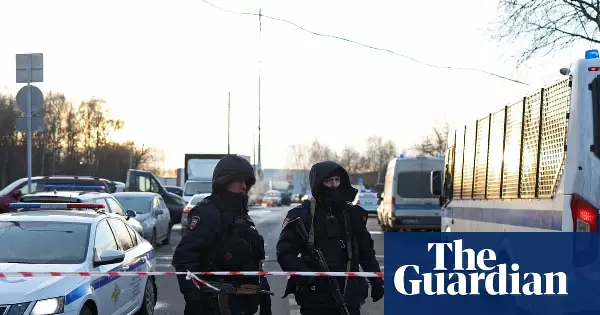
Car Explosion in Moscow Kills Three, Including Two Traffic Police Officers
A car explosion in Moscow has resulted in the deaths of two traffic police officers and a third person. According to Russia's investigative committee, an explosive device was triggered when the officers approached a suspicious person near their police vehicle on Yeletskaya Street. The incident occurred at approximately 1:30am local time, with witnesses describing a large explosion. Russian Telegram channels close to the security services believe the third person who died was planting the explosive device. The blast is the latest in a series of incidents in Moscow, including the killing of Lt Gen Fanil Sarvarov, a senior Russian general, in a car bombing less than half a mile away earlier in the week. Russian investigators have described Sarvarov's death as a probable assassination carried out by Ukrainian intelligence services. While Ukraine has not claimed responsibility for the attack on Sarvarov, Ukrainian intelligence agencies have targeted dozens of Russian military officers and officials since the start of the war, accusing them of involvement in war crimes. The investigation into the latest explosion is ongoing, with a crime scene established and CCTV footage being reviewed.
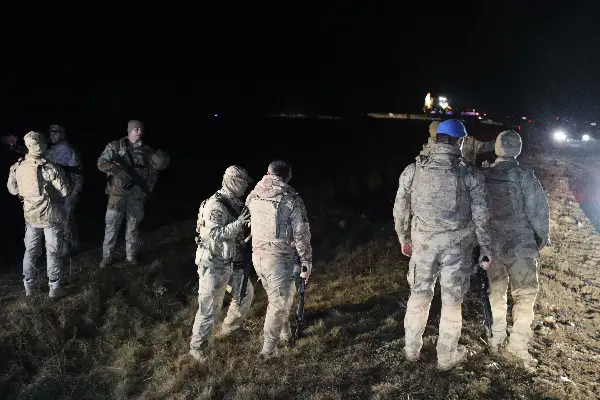
Libya's Military Chief and 7 Others Killed in Plane Crash After Takeoff from Turkey
A private jet carrying Libya's military chief, Gen. Muhammad Ali Ahmad al-Haddad, and 7 others crashed on Tuesday after takeoff from Turkey's capital, Ankara, killing everyone on board. The Libyan delegation was in Ankara for high-level defense talks aimed at boosting military cooperation between the two countries. Libyan officials said the cause of the crash was a technical malfunction on the plane. The four other officers who died in the crash were Gen. Al-Fitouri Ghraibil, Brig. Gen. Mahmoud Al-Qatawi, Mohammed Al-Asawi Diab, and Mohammed Omar Ahmed Mahjoub. The identities of the three crew members were not immediately known. The wreckage of the Falcon 50 type business jet was found near the village of Kesikkavak, in Haymana, a district some 70 kilometers south of Ankara. Turkish officials said the plane took off at 8:30 p.m. and that contact was lost 40 minutes later. The plane issued an emergency landing signal near Haymana before all communication ceased. Security camera footage showed the night sky over Haymana suddenly lit up by what appeared to be an explosion. Al-Haddad was the top military commander in western Libya and played a crucial role in the ongoing, U.N.-brokered efforts to unify Libya's military. Libya's Prime Minister Abdul-Hamid Dbeibah confirmed the death of Gen. al-Haddad and the four officers, saying in a statement on Facebook that the "tragic accident" took place as the delegation was returning home. Turkey's Justice Ministry said four prosecutors have been assigned to investigate the crash, and Libya will send a team to Ankara to work with Turkish authorities on investigating the crash.
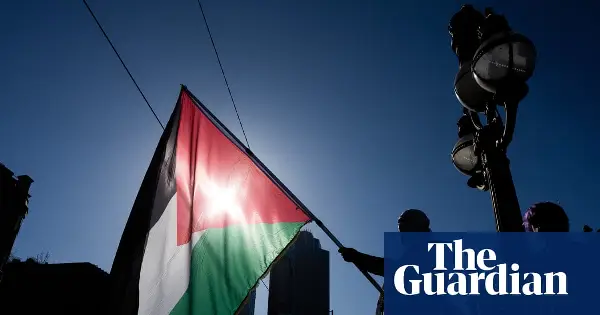
New South Wales Government Seeks to Ban 'Globalise the Intifada' Phrase Amid Pro-Palestine Protests
The New South Wales government, led by Premier Chris Minns, is moving to ban the phrase "globalise the intifada" due to its alleged link to hateful and violent rhetoric. The decision comes after a mass shooting in Bondi, which Minns claims is connected to the phrase's use in pro-Palestinian protests. However, activist groups and some experts argue that the phrase is an expression of solidarity with Palestinian resistance and that banning it could infringe upon free speech. The term "intifada" refers to an uprising or "shaking off" in Arabic, with two notable instances being the first and second intifadas against Israel in the past four decades. Pro-Palestine supporters view "globalise the intifada" as a call for international support against Israeli occupation, while others, particularly in the Jewish community, associate it with violence and terrorism. The proposed ban has sparked controversy, with some warning that it could lead to further division and court challenges. Experts argue that the phrase's meaning is contested and that outlawing it could be problematic. The NSW government's move is part of a broader effort to limit protest rights and extend hate speech laws, which has drawn criticism from civil rights groups and activists. The ban's implementation remains unclear, with details to be determined by a parliamentary committee investigating "hateful statements" next year. The debate surrounding the phrase highlights the complexities of balancing free speech with the need to address hate speech and violent rhetoric.
Iran and US Reaffirm Commitment to Diplomacy at UN Security Council Meeting
Iran and the United States have reaffirmed their commitments to diplomacy at a contentious meeting of the U.N. Security Council. Iran's U.N. Ambassador Amir Saeid Iravani stated that Iran remains fully committed to principled diplomacy and genuine negotiations, and it is now up to France, Britain, and the U.S. to take concrete steps to restore trust and confidence. The U.S. Mission counselor Morgan Ortagus said the United States remains available for formal talks with Iran but only if Tehran is prepared for direct and meaningful dialogue. However, the Trump administration has been clear that there can be no enrichment of nuclear material inside Iran, a major point of contention. The gap between the Trump administration and Iran on a nuclear deal remains wide and deep. Iran's supreme leader, Ayatollah Ali Khamenei, rejected any direct nuclear negotiations with the United States in September. The 2015 nuclear deal aimed at preventing Tehran from developing nuclear weapons is still a point of discussion, with Iran committed to its core principles. The deal was agreed upon in exchange for the lifting of sanctions, but President Donald Trump pulled the U.S. out of the agreement in 2018. The U.N. nuclear watchdog has reported that Iran has over 440 kilograms of uranium enriched up to 60%, a short step away from weapons-grade levels. France's deputy U.N. ambassador Jay Dharmadhikari defended the reimposition of sanctions, saying Iran has been in increasingly flagrant violation of all limitations designed to guarantee its nuclear program remains peaceful. Russia's U.N. Ambassador Vassily Nebenzia criticized the French envoy, saying they failed miserably in their diplomatic efforts to strike a deal on the nuclear issue with Iran. Despite the tensions, diplomacy remains an option, with both sides reaffirming their commitment to finding a solution.
India-Bangladesh Relations Deteriorate Amid Violent Protests and Diplomatic Tensions
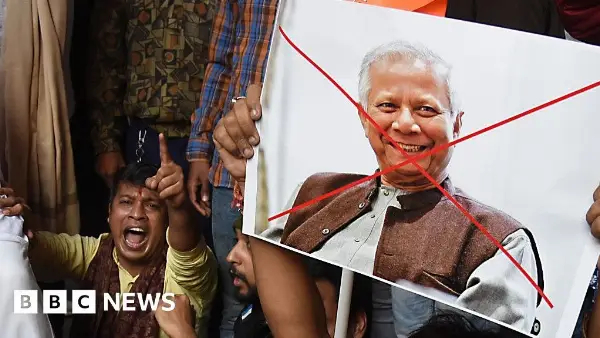
The killing of a Hindu man in Bangladesh has sparked violent protests in India and further strained relations between the two countries. Dipu Chandra Das, 27, was beaten to death by a mob in northern Bangladesh after being accused of blasphemy. The incident has led to protests by Hindu nationalist groups in India, with some calling for action against Bangladesh. In response to the protests, India and Bangladesh have suspended visa services in several cities and accused each other of failing to ensure adequate security for their diplomatic missions. The two countries have also summoned each other's high commissioners to raise their security concerns. Anti-India sentiment in Bangladesh is not new, with some Bangladeshis resenting India's influence on their country, particularly during the 15-year rule of former Prime Minister Sheikh Hasina. The anger has grown since Hasina took refuge in India, and Delhi has not agreed to send her back despite several requests from Dhaka. Analysts say the killing of Das has raised questions over the safety of minorities and civil society activists in Bangladesh, with religious fundamentalists becoming more assertive and intolerant. Radical Islamists have desecrated hundreds of Sufi shrines, attacked Hindus, and curtailed music and cultural shows. Experts warn that the current narrative in Bangladesh, where anyone who criticizes fundamentalists can be labeled "pro-India" and attacked, is dangerous and could lead to further violence. Policy makers in India are aware of the changing dynamics in Bangladesh and have indicated that they will engage with an elected government in Bangladesh to rebuild trust. Bangladesh is scheduled to hold elections on February 12, but until then, the interim administration faces the difficult task of avoiding further violence. The country's stability is key to India's security, particularly in the north-east, and experts caution that anger on the street must not be allowed to further strain bilateral ties.
Emails Reveal Connection Between Ghislaine Maxwell and Member of British Royal Family
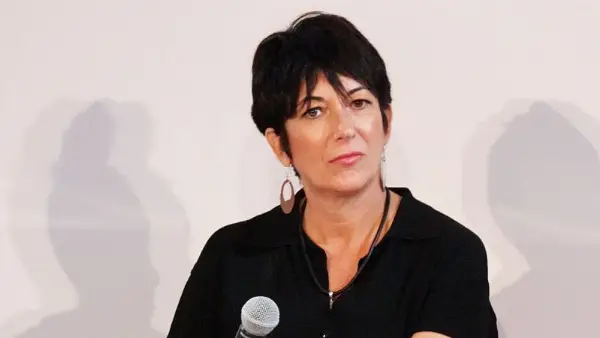
A series of emails released by the US Department of Justice has revealed a connection between Ghislaine Maxwell and a member of the British royal family, referred to as "A". The emails, dated 2001 and 2002, show "A" asking Maxwell to find them "new inappropriate friends". The writer is not explicitly identified, but the context suggests it may be Andrew Mountbatten-Windsor, also known as Prince Andrew. In one email, "A" mentions being at Balmoral, the royal family's Scottish residence, and asks Maxwell about her efforts to find them new friends. Maxwell responds, saying she has only found "appropriate friends". The emails do not suggest any wrongdoing, but they do show a close relationship between Maxwell and "A". Additionally, a separate set of emails appears to show Maxwell helping plan a trip to Peru for "A", which involves "girls". The emails suggest that Maxwell acted as a go-between for "A" and a man coordinating activities in Peru. Prince Andrew has previously denied all allegations against him, including those made by Virginia Giuffre, who accused him of sex abuse. The release of these emails has renewed scrutiny of Prince Andrew's ties to Jeffrey Epstein, a convicted sex offender who died in 2019. Recently, King Charles stripped Prince Andrew of his royal titles and ordered him to leave his residence on the grounds of Windsor Castle.

Vietnam's Communist Party Central Committee Concludes 15th Session
The 15th session of the 13th Communist Party of Vietnam (CPV) Central Committee concluded in Hanoi on Tuesday morning. According to the Vietnam News Agency, the committee adopted a report on the Party's personnel matters, which will be submitted to the 14th National Party Congress. The committee also voted on the list of nominees for the 14th tenure, including nominees for the Politburo, the Secretariat, and key leadership positions of the Party and the State for the 2026-2031 term. The voting process reportedly had a high level of consensus among the committee members. The conclusion of the 15th session marks an important step in the Party's personnel and leadership selection process. The 14th National Party Congress is expected to take place in the future, where the nominated candidates will be officially elected to their respective positions. The CPV Central Committee's decisions will have significant implications for Vietnam's political landscape and leadership in the coming years.

Private Jet Carrying Libya's Military Chief Loses Contact with Air Traffic Control
Turkey's interior minister, Ali Yerlikaya, announced that air traffic controllers lost contact with a private jet carrying Libya's military chief, Muhammad Ali Ahmad al-Haddad, and four other people. The Falcon 50 type business jet took off from Ankara's Esenboga airport and was headed for Libya after al-Haddad's visit to Turkey. The loss of contact was confirmed by the Turkish interior minister, and the airport has been closed down to flights. Al-Haddad was in Turkey's capital, Ankara, for meetings with Turkish officials before his departure. No other details are immediately available regarding the incident. The private jet's disappearance has raised concerns, and an investigation is likely to follow. The Turkish authorities have not provided any further information on the cause of the loss of contact or the current status of the private jet and its passengers.
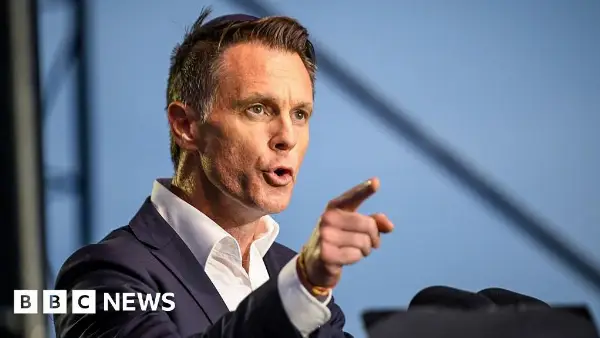
Australia Moves to Fast-Track New Gun and Protest Laws After Bondi Shooting
The Australian state of New South Wales (NSW) has recalled its parliament to debate new laws aimed at protecting the community in the wake of the Bondi shootings. NSW Premier Chris Minns stated that the changes are needed to keep the community safe, despite concerns from civil rights groups and pro-gun advocates that the laws will place undue restrictions on firearms and protests. The proposed laws include banning the phrase "globalise the intifada", limiting the number of guns one person can own, and granting greater police powers for protests. The new laws will also allow police to restrict demonstrations at places of worship, with stronger penalties for breaches. Additionally, police will be able to remove face coverings from protesters suspected of committing an offence. On gun reform, licence holders in NSW will be limited to owning four firearms, with exceptions for farmers and sport shooters. Other changes include more regular renewals for gun licence holders and a review of the types of firearms available to most gun owners. Civil libertarians have criticized the restrictions on protests, saying they are an affront to democracy. The president of the NSW Council for Civil Liberties, Timothy Roberts, argued that the laws ignore a recent court decision and damage democracy. In contrast, some community leaders, including Walter Mikac, whose family was affected by a mass shooting in 1996, have welcomed the reforms as a necessary step to close critical gaps in gun laws and prioritize community safety.

UK Court Convicts Two Men Planning ISIS-Style Attack on Jewish Community
A UK court has convicted two men, Walid Saadaoui and Amar Hussein, of plotting an ISIS-style attack on the Jewish community in northwest England. The men planned to use automatic firearms to kill hundreds of innocent people. In other news, former Prime Minister Naftali Bennett accused current Prime Minister Benjamin Netanyahu of sabotaging the Qatargate probe, which investigates connections between Netanyahu's aides and the Qatari government. Bennett claimed that Netanyahu is covering up treason in his office. In the Middle East, the IDF intercepted a drone attempting to smuggle 40 firearms from Jordan into Israeli territory. Additionally, Lebanon denied any links between its army and Hezbollah after an Israeli strike killed a Lebanese soldier. The Lebanese defense ministry stated that suggestions of ties between army personnel and armed groups are false. A Tel Aviv court released three settler extremists suspected of attacking a pregnant Arab-Israeli woman and her family in Jaffa to house arrest. The family criticized the court's decision, stating that they feel abandoned and are living in constant fear. Meanwhile, 24 people were wounded in East Jerusalem clashes after Israel Police and the IDF raided the city's Kafr Aqab and Qalandiya suburbs. Lebanese security forces suspect that the Mossad kidnapped a former officer who may have had information about Ron Arad, an Israeli soldier missing since 1986. The IDF also rescued an Israeli woman who drove into a Palestinian village in the West Bank on her own initiative. Lastly, Yemen's government and the Iran-backed Houthis agreed to release 2,900 detainees in a prisoner swap deal.
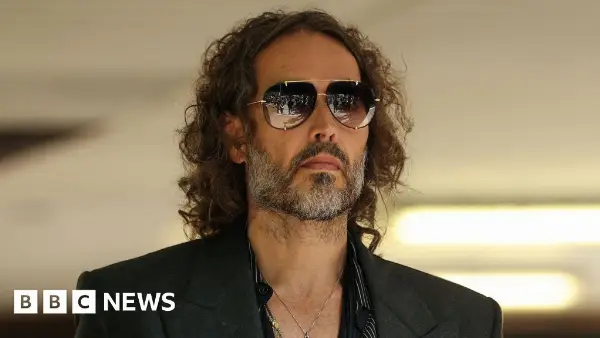
Russell Brand Charged with Additional Rape and Sexual Assault Offences
Russell Brand has been charged with two further offences, including one count of rape and one count of sexual assault, relating to two additional women. The Metropolitan Police stated that the Crown Prosecution Service (CPS) has authorised these new charges. Brand, 50, previously pleaded not guilty to five charges, including two counts of rape, two counts of sexual assault, and one count of indecent assault, in relation to four women. The new charges allegedly took place in 2009 and are separate from the original five charges, which allegedly occurred between 1999 and 2005 in central London and Bournemouth. A trial for the original charges is set to start at Southwark Crown Court on 16 June 2026. Brand is due to appear at Westminster Magistrates' Court on 20 January 2026 in relation to the two new charges. The investigation into Brand began after allegations were reported by the Sunday Times, the Times, and Channel 4's Dispatches in September 2023. The women who have made reports are receiving support from specially trained officers, according to Detective Chief Inspector Tariq Farooqi from the Metropolitan Police. Brand, who was born in Essex, rose to fame as a stand-up comedian and established a career in Hollywood, starring in films like Forgetting Sarah Marshall and Get Him To The Greek.
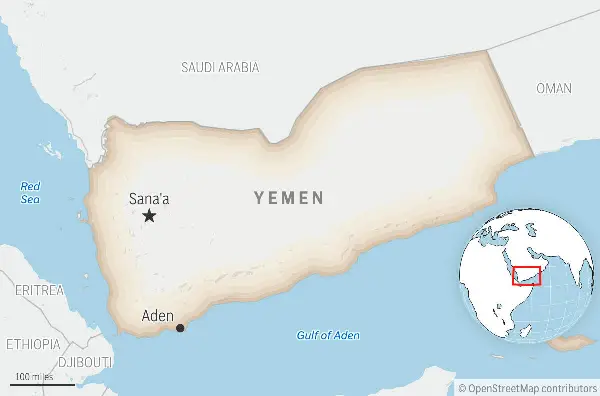
Yemen's Warring Sides Agree to Release 2,900 Detainees in Largest Exchange
Yemen's internationally recognized government and the Iran-backed Houthi rebels have reached an agreement to free 2,900 detainees held during the 11-year civil war. The agreement, signed under the supervision of the Office of the U.N. Special Envoy for Yemen and the International Committee of the Red Cross, is the largest swap during the conflict. The detainees include Saudi and Sudanese nationals, as well as Yemenis. The deal was agreed upon in the Omani capital of Muscat in cooperation with Saudi leaders. U.N. special envoy Hans Grundberg described the agreement as a "positive and meaningful step" that will ease the suffering of detainees and their families. The International Committee of the Red Cross (ICRC) played an intermediary role in the agreement and will carry out the release, transfer, and repatriation of detainees. The civil war in Yemen has killed over 150,000 people and created one of the world's worst humanitarian disasters. The conflict began in 2014 when the Houthis captured Sanaa and most of the country's north, forcing out the government. A loose regional coalition of powers, including Saudi Arabia and the United Arab Emirates, has backed the internationally recognized government in the south. The exchange deal came after a 12-day meeting in Oman, the 10th meeting held to push the parties to meet their commitments under the 2018 Stockholm Agreement to release all conflict-related detainees. The ICRC has previously carried out the release, transfer, and repatriation of over 800 prisoners in 2023 and over 1,000 detainees in October 2020.

Greta Thunberg Arrested in London for Supporting Pro-Palestinian Protest
Greta Thunberg, the Swedish climate activist, was arrested by British police on Tuesday during a pro-Palestinian protest in London. The arrest was made under the Terrorism Act after Thunberg held a sign stating support for prisoners linked to Palestine Action, an organization proscribed as a terrorist group by the British government. The sign read "I support the Palestine Action prisoners. I oppose genocide." Thunberg has previously spoken out about hunger strikers in prison awaiting trial for showing support for Palestine Action. The protest targeted a building used by an insurance firm that provides services to the British arm of Israeli defense company Elbit Systems. The UK Home Office announced plans to designate Palestine Action as a proscribed terrorist organization in June 2025, after activists broke into an airforce base and vandalized two Royal Air Force Airbus A330 MRTT refueling aircraft. The terrorist organization designation makes it a criminal offense to support the group, display its symbols, or express support for it in public. The decision to proscribe Palestine Action has been challenged by civil liberties groups, who argue that the group's actions constitute criminal damage rather than terrorism. Several experts have said that Israel's offensive in Gaza amounts to genocide, a claim that Israel vigorously denies. Thunberg's arrest was confirmed by the City of London Police, who stated that a 22-year-old woman was arrested for displaying an item in support of a proscribed organization contrary to Section 13 of the Terrorism Act 2000.

Government Waters Down Inheritance Tax Plan for Farms
The UK government has watered down its proposals to tax inherited farmland, increasing the planned threshold from £1m to £2.5m. The change follows months of protests by farmers and concern from some Labour backbenchers. Environment Secretary Emma Reynolds announced that the government has listened to farmers and is making changes to protect more ordinary family farms. The new threshold means that a couple could pass on up to £5m in qualifying assets without paying tax, with a 50% relief applied to remaining assets above the threshold. The National Farmers' Union and the Country Land and Business Association have welcomed the change, but warned that many family businesses will still be affected by the tax burden. Farmers have been protesting against the changes since they were announced last year, and some Labour MPs have expressed concern. The government's U-turn is the latest in a series of reversals since being elected in July 2024. The original proposal would have seen inherited agricultural assets worth over £1m taxed at 20%, raising an estimated £520m annually by 2029. However, the government has now stepped back from this plan, reducing the number of estates expected to pay more inheritance tax in 2026/27 from around 2,000 to 1,100. The opposition has criticized the government for putting farmers through over a year of uncertainty and anguish, and is calling for the tax to be scrapped in full.
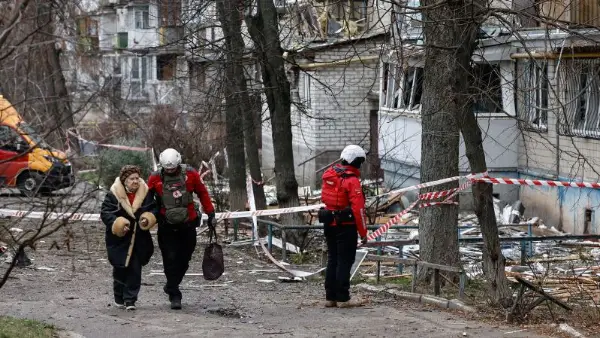
Russia Launches Massive Aerial Attack on Ukraine, Killing Four-Year-Old Child
Russia has launched one of its largest aerial attacks on Ukraine this month, resulting in the deaths of at least three people, including a four-year-old child, and injuring at least 17 others. The attack, which involved over 650 drones and 30 missiles, targeted 13 regions across the country, causing widespread damage and imposing emergency power cuts. Ukrainian President Volodymyr Zelensky received a briefing from his negotiating team, who recently returned from talks in the US, on a 20-point document outlining a potential agreement framework between Ukraine and the US. The document includes security guarantees between Ukraine, Europe, and the US, as well as bilateral security guarantees between Ukraine and the US. Zelensky stated that while progress has been made, "not everything is perfect so far," and that Ukraine is "very close to a real outcome" on the bilateral security guarantees. The attack comes amid ongoing peace talks, with Russian President Vladimir Putin refusing to compromise on demands for Ukraine to cede territory in the Donbas region. The US has intensified its push for peace, with White House envoy Steve Witkoff stating that Russia "remains fully committed to achieving peace in Ukraine." Despite this, Kremlin spokesman Dmitry Peskov downplayed the significance of the recent talks, describing them as a "working process." Zelensky has put Ukraine's military on high alert for potential Russian attacks around Christmas, citing the lack of air defenses available to defend the country. The latest attack has been seen as a clear signal of Russia's priorities, with Zelensky stating that it "sends an extremely clear signal about Russia's priorities" ahead of Christmas.
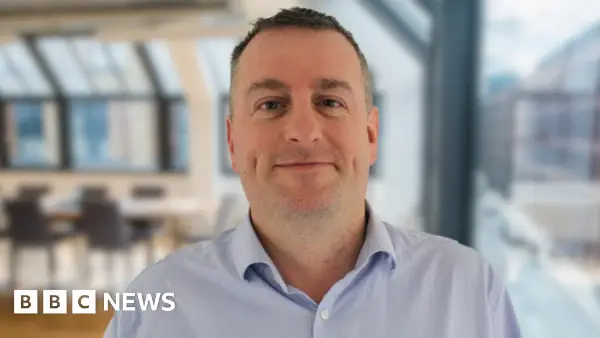
Former Councillor Charged with 56 Offences Including Rape and Administering Substances
Philip Young, a 49-year-old former Conservative councillor, has appeared in court charged with 56 offences, including multiple counts of rape and administering a substance with intent to stupefy his ex-wife, Joanne Young. The alleged offences took place over a 13-year period, from 2010 to 2023. Young, who served as a councillor for Covingham and Nythe between 2007 and 2010, is also accused of voyeurism, possession of indecent images of children, and possession of extreme images. He did not enter a plea and was remanded into custody. Five other men, Norman Macksoni, Dean Hamilton, Conner Sanderson Doyle, Richard Wilkins, and Mohammed Hassan, also appeared in court charged with sexual offences against Joanne Young. Macksoni and Hamilton pleaded not guilty to the charges against them, while the others did not enter a plea. All six men are due to appear at Swindon Crown Court for a hearing on 23 January. Wiltshire Police are still trying to identify another man in connection with the investigation and have released a description of the individual, asking anyone with information to come forward.